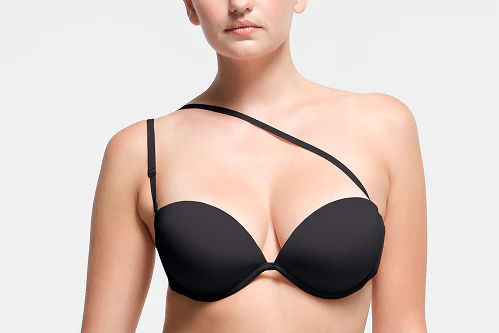
Small Ribcage, Bigger Bust? Here’s What to Look for in a Swimsuit
Small Ribcage, Bigger Bust? Here’s what to look for in a swimsuit
If you have a narrow ribcage (28–32 band) and a fuller bust (D+), you already know that most “big bust” swim advice doesn’t always apply. Many guides assume you also have a larger frame, which changes everything about strap placement, wire width, and band tension. But when your frame is small and your cup volume is high, support has to come from precision construction, not just more fabric.
Quick takeaways:
- Women with small ribcages and fuller busts need swimwear built with a firm underwire, narrow bands, and thoughtful strap placement.
- In well-constructed swimwear, about 80% of support should come from the underband, not the straps.
- If your top gaps or spills, the cup shape or width may be wrong.
Band Size vs. Cup Size: Why this matters in swim
In a properly fitting swimsuit top, cup size should be proportional to band size. A 32D is not the same volume as a 28D. Just like when you’re finding your correct bra size, when you move down in band size, cup letters scale differently. Many women who’ve worn 34D for years discover they are closer to a 30F or 28G once properly fitted.
In swimwear, this matters even more because fabric stretches when wet. If the band is too loose when dry, it will feel unsupported in water. For narrow frames, the most supportive styles are those that anchor firmly through the underband or torso area while still allowing enough depth in the cups.
The 4 swim top construction features that actually support you
- A Firm Underband AnchorThe band should provide the majority of support. In bikini tops, it should sit horizontally across your ribcage and feel secure rather than relying on the straps. Structured underbands or bra-style closures typically provide more stability than pull-over styles with minimal elastic. In one-piece swimsuits, internal shelf bras and supportive lining help create a similar anchoring effect through the torso.
- Adjustable, Centered StrapsStraps should stabilize the fit, not carry the full weight of the bust. Adjustable straps allow you to fine-tune vertical tension, while more centered placement helps prevent slipping on narrower shoulders. Racerback conversions can also help keep weight balanced.
- Side Support StructureSide support panels guide tissue forward and reduce side spillage, while side boning can help prevent the band from collapsing or folding under weight. These structural elements add stability without increasing bulk.
- Precise Back ClosuresMulti-hook closures on bikini tops allow for more precise adjustment than single plastic clasps, which can make a noticeable difference for 28–32 bands.
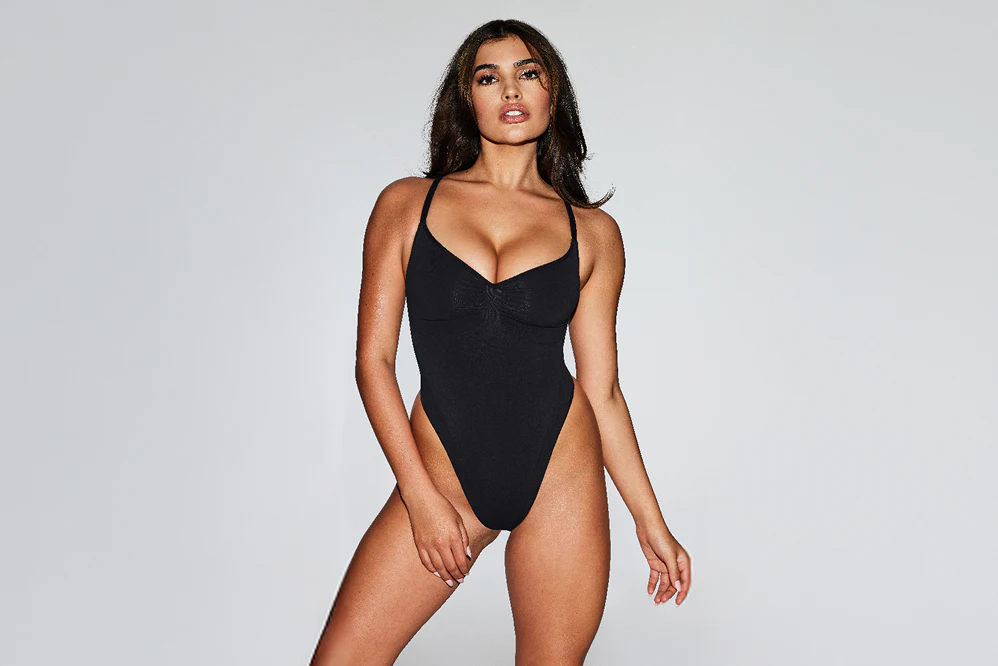
When these elements work together, the band and internal structure provide the primary support while straps simply stabilize the fit. Explore silhouettes designed with supportive construction in the SKIMS Swim Collection.
Why tie bikinis often fail on smaller frames
String and tie bikinis can look appealing, but for women with a small ribcage and fuller bust, they can lack the structural anchor needed for real support.
- Thin ties depend on tension rather than engineered construction, which means the entire weight of the bust is stabilized by narrow strings instead of a firm underband.
- Once the fabric becomes wet, it gains weight and the elasticity relaxes slightly, making those ties even less reliable.
- On a narrow frame, this can lead to sliding, shifting, or constant readjusting.
If you prefer the look of a triangle silhouette, look for two-piece Swim styles with a stronger underband, wider straps, and supportive stretch recovery fabric—like the Signature Swim Plunge Bikini Top. That way, you maintain the aesthetic you love without sacrificing stability. (If you’re feeling a bold aesthetic: don’t miss the Signature Swim Layered Plunge Bikini Top, which has both supportive underwire and a string bikini accent.)
Diagnostic Guide: If this happens, it means…
Straps sliding off your shoulders?The band may be too loose, or the straps may be set too wide for your frame.
Deep red strap marks?Your straps are doing too much work. The band isn’t anchored firmly enough.
Center panel lifting away from your chest?The cups may be too small, or the band isn’t anchoring firmly enough.
Underwire digging into armpit tissue?The cup width may be too wide for your frame.
Bust spillage?The cup volume or shape isn’t compatible with your bust fullness.
FAQS
The bust of my swimsuit feels too small. Can I just size up to a medium or large?
No. Sizing up increases band circumference without correctly scaling cup width or support. Try a bikini top where you can select a larger cup size, like the Ultimate Push-up Tie Back Bikini Top.
Should swimwear feel tighter than my bra?
Yes. Swim fabric relaxes and stretches more when wet, so it should feel firmly supportive when dry.
What fabric is best for supportive swimwear?
High-density Nylon/Spandex blends with strong stretch recovery offer the best hold.
Why does my bikini top shift in the water?
If the band lacks structure or is sized too big, water weight and movement can cause it to shift.
Does chlorine reduce support?
Over time, yes. Rinse your swimsuit in cold water immediately after swimming to preserve elasticity.
Why does the side of my bust spill out of my swimsuit?
Side spillage usually means the cup isn't wide enough to contain your full breast tissue, or the style lacks lateral support. This is common with triangle bikini tops and bandeau swimsuits where the cups sit narrower across the chest. Try a swim top with wider cups, side boning, or built-in side support panels, these hold everything in place without relying on the fabric alone. Sizing up in the cup can also help if the fit feels right everywhere else. For fuller busts, a full-coverage swim top or underwired bikini top will give the most secure, smoothing fit from front to side.
What type of bikini top closure is most supportive?
Back-clasp closures give the most adjustable, secure fit (similar to a traditional bra) and work well for larger busts or high-activity days at the beach. Tie-back bikini tops offer more flexibility in sizing but can loosen in the water. If you want the security of a clasp with the look of a minimal swim top, try a style with a back hook and removable padding for a custom fit.
Are high-neck swimsuits more supportive?They offer coverage and containment, but bust support still comes from the band structure.
What if one breast is larger?Fit the larger side first and then use the adjustable straps to achieve balance.
Can I wear a sports-bra style swim top with a larger bust on a small frame?Yes, especially if it has a firm underband and strong recovery fabric, like our Plunge Bikini Top.
Why do molded cups sometimes gap?Molded cups hold a fixed shape, so they can gap if your natural shape doesn't fill the cup evenly, especially when moving, bending, or lying down. If you notice gapping, try sizing down in the cup or switching to a style with seamed or unlined cups, which flex and mold to your body for a closer fit. Our Triangle Bikini Top and Plunge Bikini Top are great options if you prefer a more adaptive fit.
The right swimwear doesn’t just accommodate your bust, it works with your whole frame. When your band anchors properly, your straps stabilize naturally, and your fabric recovers confidently, you don’t have to adjust, tug, or compromise. You get support that feels secure, and style that looks intentional.