How to Store and Wash Knitwear So It Doesn’t Stretch or Lose Shape
How to Store and Wash Knitwear So It Doesn’t Stretch or Lose Shape
Good knitwear has a way of making you feel instantly pulled together. It’s soft, flattering, and designed to follow your every move.
But that stretchy-soft comfort is also why some knits can lose their shape if they’re washed, dried, or stored improperly. Unlike woven fabrics, knits are built from continuous, interlocking loops of thread. These flexible loops stretch with you, while responding to moisture, heat, and gravity.
The good news: they’re not permanent, and you don’t need a complicated routine to keep your knits in their best shape (literally). You just need the right framework for your fabric, and a few habits that protect your knit’s structure from unnecessary stress.
Quick Trick
When wearing knits, adding a sleek base layer underneath can help protect them from the daily friction that causes changes in shape. For example, try a SKIMS Fits Everybody Cami Bodysuit under a cardigan, or a Soft Smoothing Seamless brief or shapewear shorts under softer knit dresses to reduce rub at high-contact zones (like your waistline, where a purse might rub, or a desk seat).
The fiber-first care framework
Your wash and storage choices should follow the needs of the specific knit fiber. First, check the label and sort your knits into three categories:
- Natural fibers (wool, cashmere, alpaca, silk blends)These animal-derived fibers are sensitive to heat, agitation, and harsh detergents. They can stretch when wet, shrink when exposed to heat, or felt/pill if exposed to friction.
- Plant-based, cellulosic, and regenerated fibers (cotton, viscose, bamboo, lyocell)Cotton knits are generally durable, but regenerated fibers like viscose and bamboo can be significantly weaker when wet, which makes them more prone to warping if wrung, pulled, tumbled at high heat, or hung in the wrong way to dry.
- Synthetic blends (polyester, acrylic, nylon blends)These can be easy-care, but they’re still prone to pilling, and high heat can “set” wrinkles or distortions into the fabric.
How to wash knitwear with minimal agitation
A lot of knitwear damage happens in the wash. It’s not water that’s the problem—it's the agitation of rubbing against other fabrics in the process.
Tip 1: Check your chemicals.
Many detergents—even ones labeled “delicate”—contain enzymes designed to break down stains. Delicate fabrics like wool and cashmere can weaken under repeated exposure to harsh detergents. For these natural knits, choose an enzyme-free, wool-appropriate wash, and skip brighteners and bleach.
Tip 2: Careful machine washing (only when the label permits it).
If the care label says machine washing is allowed, go for it. But follow these tips to reduce the risk of your fabric weakening and the garment ending up misshapen:
- Containment: put the knit in a mesh laundry bag—this prevents it from rubbing against harsher fibers and helps it not get stretched out
- Cycle: use a “wool,” “hand wash,” or “gentle” cycle—with cold water
- Spin: if your wash has this setting, keep spin low (high spin can stretch wet fibers against the drum).
For your most-worn essentials—like that cotton knit layer you reach for weekly—this approach can keep your piece looking polished without turning care into a whole project. If you often wear SKIMS fitted knits as a styling base (like a sleek, form-fitting tee or a Soft Lounge base layer), the routine of gentle machine washing (plus air drying) preserves the clean, smooth finish that makes outfits feel intentional.
Tip 3: Hand wash to protect shape. Use the old handwash method when the label calls for it, or when you want to maximize the longevity and condition of your cashmere, fine wool, and delicate blends.
- Hand-washing how-to:
- Fill a sink, bathtub, or other basin with cool to lukewarm water (keep temperature consistent for wash and rinse).
- Add a small amount of appropriate detergent and mix/dissolve it fully.
- Submerge the knit and gently press it through the water—no twisting, harsh scrubbing, or wringing. You can do a little tossing to get the soap suds up. If there’s a stain, gently dab it with extra detergent and massage it out, but don’t scrub it too hard or you’ll be left with uneven fibers.
- Soak 10–20 minutes.
- Rinse in water at a similar temperature.
- When finished washing, don’t wring it dry. Press out water against the side of the basin, and hang delicately or lay flat to dry. (Avoid hanging with a hanger, or you could be left with hanger marks and the shoulders might stretch.) More drying instructions are below.
How to dry knitwear beyond just “lay flat”
Drying is where the garment’s final shape gets set. When it’s wet, knitwear is heavier than you think, and simple gravity can pull loops down and out of alignment easily. You can avoid this with other drying strategies.
Tip 1: The towel-roll “Swiss roll” method
This is the fastest way to remove water without stretching the fabric or stressing its fibers. Start by laying the knit flat on a clean, absorbent towel, then roll the towel and garment together into a tight cylinder. Press firmly along the roll to transfer moisture into the towel, avoiding any twisting or wringing. Once unrolled, the garment will be damp rather than wet, making it much easier to lay flat to dry.
Tip 2: Reshaping
Reshaping doesn’t require special mats or tools to be effective. All you need is a flat surface and a measured, gentle approach. Lay the garment flat and smooth it into place with your palms, using light patting motions rather than pulling on the hem or sleeves. Take a moment to align seams, cuffs, and edges so both sides are even, and if you know the garment’s original measurements—such as length or sleeve width—use them as a guide to restore its intended silhouette as it dries.
Tip 3: Get a good drying rack
A metal bar or mesh drying rack helps airflow reach both sides, which can reduce that lingering “damp” smell from slow drying while laying flat or over another surface.
Storage tips that prevent stretch and hanger bumps
Gravity works on knitwear 24/7, especially on heavier pieces. The right storage is essential for fabric’s long-term care.
Fold, don’t hang. Even padded hangers can create shoulder bumps over time, and hanging can lengthen the body of the garment. For a simple system that protects shape:
- Stack heavier knits at the bottom and lighter knits on top.
- Don’t overpack shelves or drawers—compression can flatten your clothes’ fluffiness.
Small-space solution: the over-the-hanger foldIf you don’t have drawers, use a hanger’s horizontal bar:
- Fold the sweater in half vertically (sleeve to sleeve).
- Drape it over the horizontal bar of a hanger so the fold sits at the center of the body.
- Tuck sleeves over the top to distribute weight and prevent wrinkles.
Long-term storage: For travel or seasonal swaps, breathable garment bags might be gentler than airtight plastic when it comes to putting away or packing up your knits.
Restoration: how to fix common knitwear damage
If a knit has already lost shape, don't worry—you can try to reset it by reintroducing some controlled moisture, then reshaping.
How to remove hanger bumps
Lightly dampen the shoulder area with a spray bottle, or use steam held just off the fabric to relax fibers. Massage the stitches back into alignment with your fingertips. Lay flat to dry.
How to rescue a sweater that shrank in the wash
If the knit got felted (tight, dense, and matted), it may never fully recover. But if it’s simply compacted, a conditioner or gentle-soap soak can relax fibers enough to re-stretch and reshape. Soak the garment, gently ease back to size while wet, then lay flat and reshape carefully as it dries.
How to prevent elbows, cuffs, and hems from bagging out
You know how knitwear stretches where your limbs bend, and then stays that way? Localized steaming, then cooling flat, can help the fibers contract back toward their original silhouette. If your fiber allows, this could be a good time to put it in the dryer on low heat just long enough for fibers to snap back into place.
Which knitwear is best for keeping its shape?
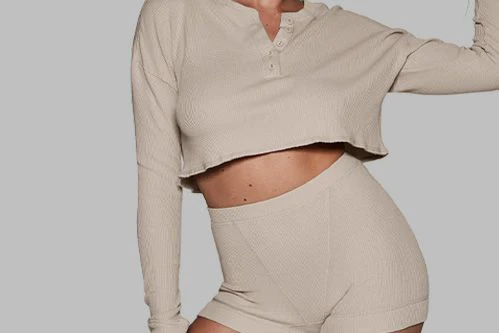
Knitwear that maintains its shape best is typically made of a strongly spun thread, in a strong construction, with balanced elasticity. Fabrics with a tighter gauge, ribbed support, or engineered stretch fare better against distortion or sagging.
Knits with defined textures — such as cotton rib or waffle weaves — often retain their shape better than overly loose or soft knits, which prioritize a loose and super-soft feel over structural integrity.
SKIMS sweaters offer this blend of comfort and resilience. Our more substantial knit textures and thoughtful construction help the garments retain their form while providing the ease and softness you expect in everyday wear. When cared for with proper washing and flat drying, SKIMS knit pieces can stay looking refined and intentional through many wears.
FAQs
Can I use “delicate” detergent for wool sweaters?
Not always. Some delicate detergents contain enzymes that may be tough on fibers over time. For wool and cashmere, choose an enzyme-free wool wash.
Should I use fabric softener on knitwear?
Generally no. Knits are already soft. Chemical softeners can leave residue, reduce breathability, and affect how fibers behave over time.
Can I steam knitwear instead of washing it?
Steaming is great for refreshing between washes—it helps with odor reduction, wrinkle release, and light shape recovery—but it won’t remove dirt or oils the way proper, soap-and-water washing does.
I don’t have a dresser to store folded knits. How can I store them in my closet?
If you only have a closet rod, use the over-the-hanger-bar fold method to avoid shoulder bumps and stretching. (Fold the sweater in half, drape it over the bar of a hanger so the fold sits at the center of the body, tuck sleeves over the top to distribute weight and prevent wrinkles, then hang it up.)
How often should I wash wool?
Less than you think. Simply airing it out, occasionally using a fabric freshening spray, and spot cleaning often go a long way, and fewer washes reduce wear.
Knitwear should support (and soften) your life without adding any complications. When you take note to match care to fiber needs, protect your knits from agitation and gravity, and use a storage method that keeps shape in mind, your pieces stay cozy and structured season after season.